
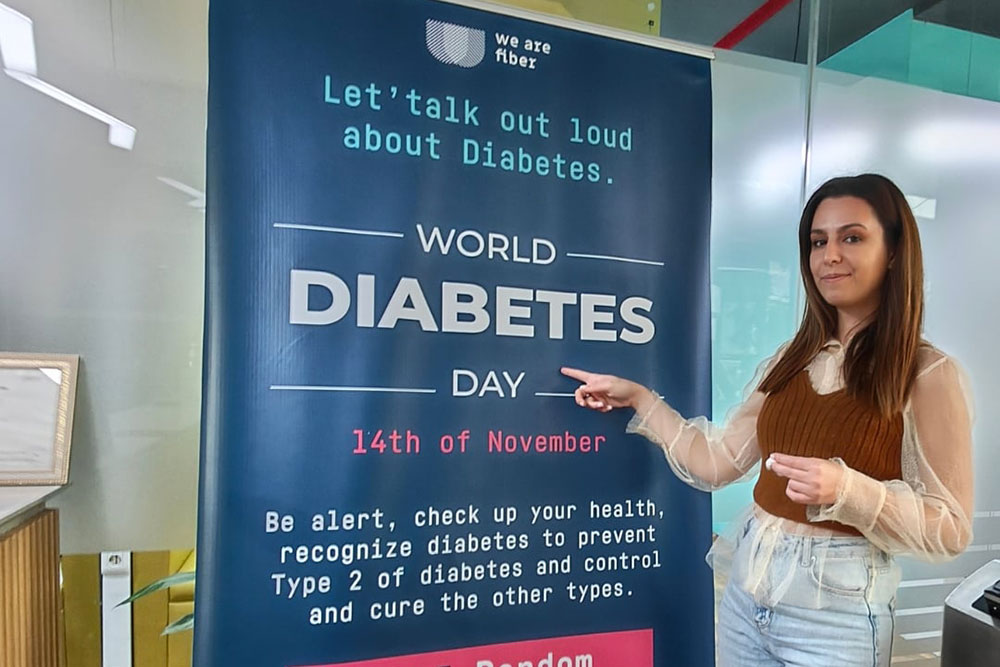
Did you know that November is the official month dedicated to diabetes awareness?
World Diabetes Day is celebrated on 14 November to pay tribute to Frederick Banting, who discovered insulin in 1922 and was born on this very day. During this month, We Are Fiber aims to raise awareness of the risk factors, symptoms and different types of diabetes.
This activity is extremely important to us because we care about the health of our employees. We hope that during this month we can have a positive impact on the company and raise awareness of the importance of a healthy lifestyle. This also applies to all our readers. Pay attention to your health!
What we offered our employees during this month:
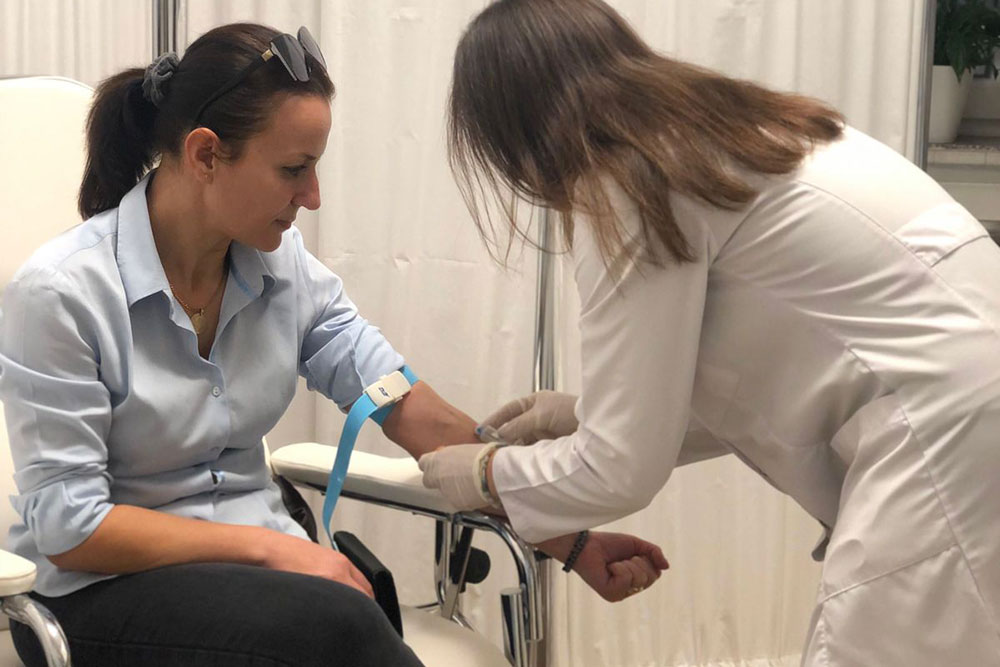
First of all, we provided our employees with detailed information on prediabetes and diabetes and on how to prevent or delay these medical conditions. We gave all our employees the opportunity to have a free blood-sugar test. And employees with a blood glucose level higher than normal were given the possibility of undergoing further tests and receiving a free consultation from an endocrinologist.
So, what exactly is diabetes?
According to the CDC (Center for Disease Control and Prevention), i.e. the United States agency for disease control and prevention, diabetes is a chronic, long-lasting health condition that affects how the body turns food into energy. The body breaks down most of the food eaten into sugar (glucose) and releases it into the bloodstream.
When the glucose level rises, this signals the pancreas to release insulin. Insulin acts as a key, facilitating the entry of glucose into the body’s cells to then be turned into energy.
With diabetes, the body does not produce enough insulin or cannot use it as it should. When there is not enough insulin or the cells stop responding to insulin, too much glucose remains in the bloodstream. Over time, this can cause serious health problems, such as heart disease, vision loss and kidney disease. Below we will briefly explain the 2 main types of diabetes:
Type 1 diabetes
Type 1 diabetes occurs when the body is unable to produce insulin, which, as we mentioned earlier, is a hormone in the pancreas that breaks down carbohydrates into glucose in order to produce energy. Insulin therapy helps the pancreas function correctly. Many children suffer from type 1 diabetes, although it can affect people of any age and background.
Type 2 diabetes
Type 2 diabetes is the most common form of the disease, in which the body is unable to process its own insulin well enough to keep glucose at normal levels. The risks of suffering from type 2 diabetes increase if you are overweight, if you are over 45, if diabetes runs in the family, if you lead a sedentary life and if you have been diagnosed with prediabetes. Losing weight is a fundamental preventive measure. Habitual alcohol consumers and smokers are also at risk of developing diabetes.
Other types of diabetes
Gestational diabetes – Appears during pregnancy, when the woman has given birth to a baby weighing more than 4 kg.
LADA diabetes – A type of diabetes caused by the attack of antibodies against the pancreatic cells, insulin or the enzymes involved in the functioning of the pancreas. Prediabetes – With prediabetes, blood sugar levels are higher than normal, but not high enough for a diagnosis of type 2 diabetes.
A large number of people in the world suffer from prediabetes. Only 1 in 2 people with prediabetes knows they have it. This condition often goes undetected and therefore untreated. The clinical signs are not detected and, in most cases, patients do not even notice them. How life-threatening is diabetes compared to other well-known diseases?
Well, it might be shocking to reveal since the statistics on this question are incredible. Let’s look at the mortality rates of diabetes compared to those of HIV/AIDS, tuberculosis and malaria.
In 2021, there were about 6.7 million deaths due to diabetes and 1 million people became blind. Diabetes is one of the leading causes of blindness, kidney failure, heart attack, stroke and lower-limb amputation.
On the other hand, as for the statistics of the other diseases in 2021: there were 0.65 million deaths from HIV/AIDS, 1.6 million deaths from tuberculosis and 0.6 million deaths from malaria.
Is there a cure for diabetes?
Unfortunately, there is still no cure for diabetes. Scientists are currently working on an innovative weight-management study to help people put type 2 diabetes into remission. Remission occurs when blood glucose (or blood sugar) levels are back to a normal range.
Dick Gregory, an activist, argued that “people with high blood pressure, diabetes – these are conditions caused by lifestyle. If you change your lifestyle, they will go away.” Even if this might not be 100% true, for some of the reasons we mentioned earlier, there is a grain of truth in what he claims.
Changing your lifestyle can lead to normalizing blood glucose levels, even without medication. This does not mean a complete cure, because type 2 diabetes, for example, is a chronic disease, but the changes will nonetheless be evident! The life of a person with diabetes can improve in an unimaginable way.
What do we suggest to our employees (and everyone else)?
Not much, other than to take care of your health!
There are probably a few things you meant to do that could improve your health. Whatever your goals, there is never a better time than the present to take care of yourself.
This might involve preparing a healthier lunch, taking more walks or scheduling an appointment with a doctor. You can involve colleagues in these activities so you get to know each other even better during this adventure.
We suggest launching a challenge:
If you want to start drinking more water, you can launch a challenge on who can refill their water bottle the most in a day, during office hours.
Or to see who can take the most steps each day or during the weekend (and show the results every Monday).
To summarize and support you, below you will find a list of everything you need to do to prevent or keep diabetes under control:
1 – Lose excess weight
2 – Regular physical activity: brisk walking, cycling, running or swimming; start with 5-10 minutes a day; 3-5 days a week; then try to do a total of 150 minutes a week.
3 – Take at least 10,000 steps a day
4 – Eat healthily
5 – Limit animal fats (beef, cheese, fatty meats)
6 – Limit fats in general (less oil and fried foods)
7 – Consume as much fibre as possible
8 – Eat more fruit and vegetables every day
9 – Weight maintenance
Remember to have regular check-ups. Do not wait for the disease to do its damage before treating it. Prevention is the best medicine!
We Are Fiber pays extreme attention to health issues because, without health, nothing else matters. We make sure our employees are aware of health-related problems and we do our best to make them feel safe, protected and cared for in their work environment.